
P2 · Capability / Process
Process and Equipment: The Line Behind the Oil
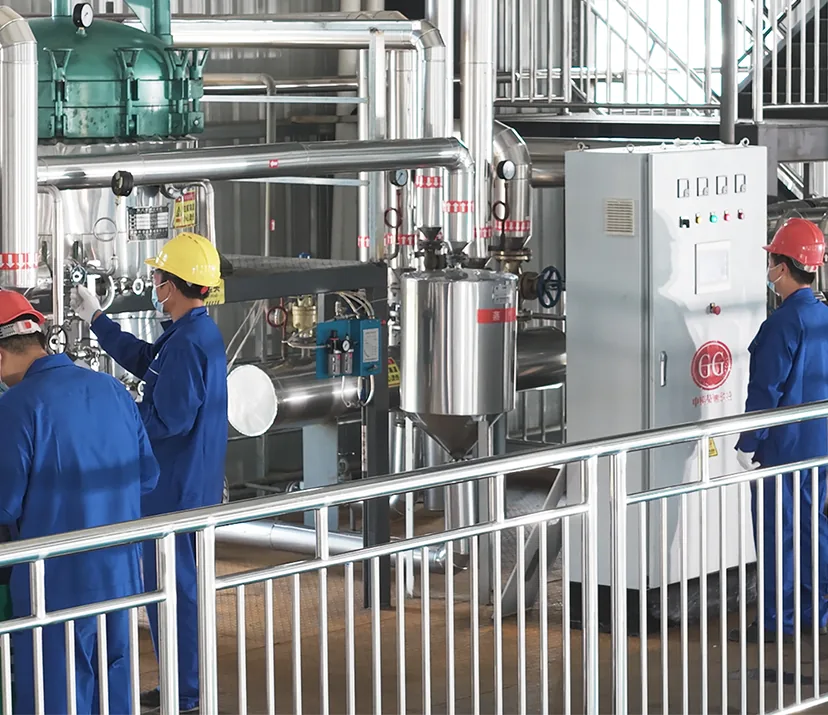
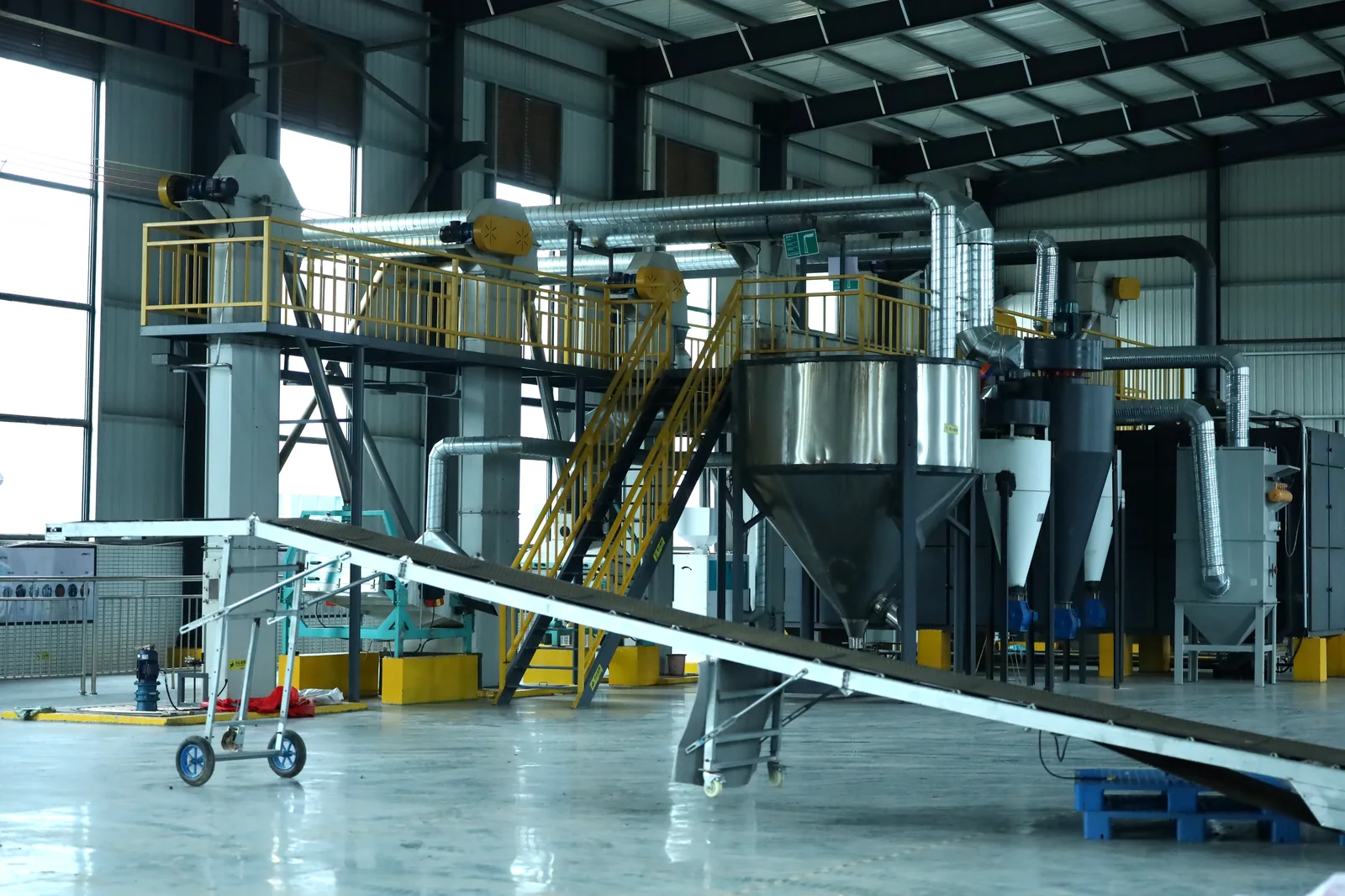
Seven machines, one continuous line: cleaning and destoning, dehulling, drying, twin-screw pressing, leaf filtration and cake handling. Seed enters at one end and oil leaves at the other without being moved between buildings, which is why one batch code can follow it the whole way.
The line, in order
The order is fixed by the equipment, not by the order we happen to receive. Seed is cleaned and destoned first, then dehulled, dried to a stable moisture, pressed, filtered and packed. Nothing is added between steps — the only inputs are seed, water for the dryer and electricity.
| # | Stage | Equipment | Purpose |
|---|---|---|---|
| 1 | Cleaning and destoning | Vibrating screen, gravity destoner, magnetic separator | Remove husk, dust, stones, tramp metal |
| 2 | Dehulling | Dehuller with kernel/husk separation | Crack shells, separate kernels |
| 3 | Drying | Flat-bed steam dryer | Bring seed to 6–9 % moisture for even pressing |
| 4 | Pressing | Twin-screw expeller | Mechanical pressing only, at or below 60 °C |
| 5 | Filtration | Leaf filter | Remove solids; no bleaching, no deodorising |
| 6 | Cake handling | Cake conveyor, mill, bagging | Mill, cool and bag press cake |
Where the temperature is held at or below 60 °C
The only heat in the process is the dryer and the friction of pressing itself. Pressing temperature is held at or below 60 °C, and that is the number that makes the words cold pressed mean something specific here rather than describing a style.
What is automated, and what is not
Feeding, conveying, pressing, filtering and cake handling run continuously without manual transfer between stages. What stays manual is judgement rather than movement: seed is looked at on intake, and the press operator watches the cake and the oil instead of a screen. Automation moves the oil; people sign off on it.
After the press: where the stream splits
Up to the press, it is one line. After it, the oil goes two ways. Part is filtered and packed as cold pressed — nothing added, nothing removed. Part enters refining and passes four stages: degumming removes phospholipids, neutralisation lowers free fatty acids, bleaching takes out colour bodies, deodorisation strips aroma under vacuum. Both return to the same filling hall.
What the line can process in a year
About 400 tonnes of seed a year from our own plantation, yielding roughly 88 tonnes of finished oil from that seed. The gap between the two numbers is the point — cold pressing leaves more oil in the cake than solvent extraction, and that is why the volume is what it is.
| Item | Figure |
|---|---|
| Seed from own plantation | approx. 400 t / year |
| Finished oil from own seed | approx. 88 t / year |
| Plantation | 66.66 hectares, under continuous management since 2013 |
| Facility established | 2023 |
Why the equipment matters to a buyer
Equipment is not a selling point by itself — a buyer cannot taste a press. What it does tell you is capacity and consistency: seven machines in one line means the oil is not moved between buildings, and one batch code can follow it from intake to drum.
Frequently asked questions
Six questions come up in almost every process enquiry: how the oil is pressed, what the temperature is, whether solvent is used, how many stages the line has, what happens to the cake and whether the equipment can be visited. Short answers follow.
How is the oil pressed?
Mechanically, in twin-screw expellers, at or below 60 °C. No solvent is used at any stage.
Is solvent used anywhere in the line?
No. There is no extraction plant on site; the only inputs are seed, water for the dryer and electricity.
How many stages does the line have?
Six, from cleaning and destoning through to cake handling, on seven machines in one building.
What happens to the press cake?
It is milled, cooled and bagged, and sold as a by-product. Filter residue goes back into the press.
Can we visit the plant?
Yes. Visits and audits are arranged on request in Qiyang, Hunan, with about two weeks’ notice so you see the line in operation rather than idle.
Do you refine the oil after pressing?
Part of it. After pressing the stream splits — one part is filtered and packed as cold pressed and unrefined, the other enters the refining line for four stages: degumming, neutralisation, bleaching and deodorisation. Neither grade is blended.